
Operational Economics & Capital Structuring for Industrial Producers
Analyzing the heavy asset intensity of precision manufacturing: CNC machine tool capex, raw material holding cycles, OEM payment lags, and the multi-tranche debt structures that finance production expansion without equity dilution.
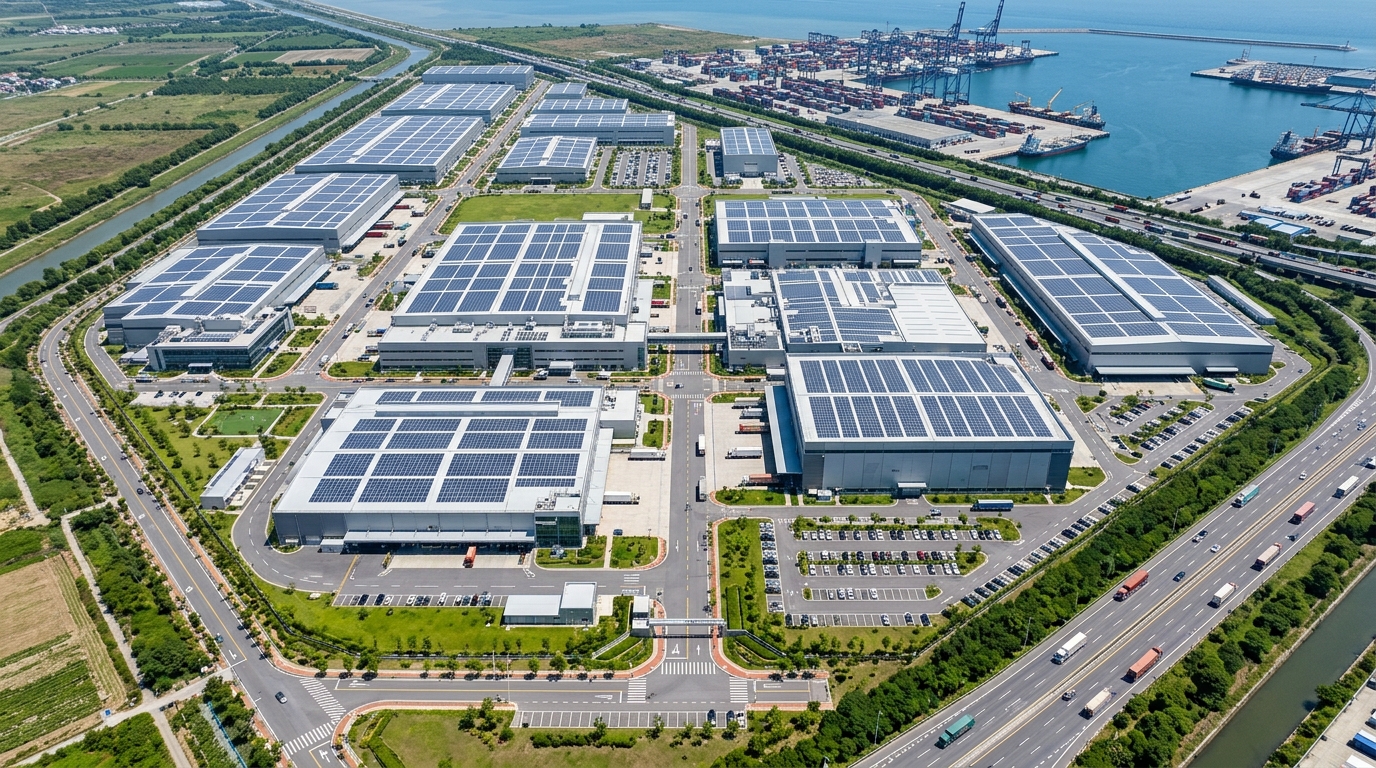
The Heavy Fixed Overhead & Operational Gearing Reality
Advanced precision manufacturing operates under unforgiving operating leverage. Production machinery, factory square footage, cleanroom utilities, and specialized toolmaking engineering salaries represent 25% to 35% of total cost of goods sold. Consequently, minor shifts in overall equipment capacity utilization create violent swings in EBITDA and cash available for debt service.
When mid-market component producers secure multi-year platform contracts from global automotive, aerospace, or industrial OEMs, capital outlays intensify months before first production revenues materialize. Specialized progressive stamping dies, PPAP Level 3 qualification runs, and primary metal mill Minimum Order Quantities (MOQs) create acute cash deficits that rigid commercial bank overdrafts cannot support.
The 90 to 135-Day Cash Conversion Deficit
IIndustrial balance sheets exhibit intense working capital inertia. Raw steel coils, aluminium billets, and technical resins must be procured and held in safety stock (30 days), processed through machining and outside heat treatment (20 to 30 days), and staged in Vendor Managed Inventory (VMI) buffer hubs (20 days). When combined with 60 to 90-day OEM credit terms, the net cash gap routinely exceeds 120 days.
OEM Customer Dominance & Price-Down Pressures
IIGlobal Tier-1 automotive and aerospace primes enforce stringent procurement regimes: Electronic Data Interchange (EDI) rolling call-offs, contractual 2% to 4% annual price-down productivity mandates, and commercial dilution chargebacks for micro-blemishes. Manufacturers must continuously automate production to protect gross margins against contractual deflation.
Machinery Depreciation vs. Economic Useful Life
IIICommercial accounting standards mandate aggressive straight-line book depreciation of CNC machines and robotic cells over 5 to 7 years. In reality, premium German and Japanese machine tools retain high secondary market liquidity and operate with sub-micron tolerances for 15 to 20 years. Bayswater unlocks debt capacity by underwriting independent Net Orderly Liquidation Values (NOLV) rather than distorted book values.
Dual-Tranche Capital Stack Integration
IVBayswater Transflow structures integrated dual-tranche debt programs: long-tenor amortising term loans secured by specific fixed charges on serial-numbered machine tools, paired with formulaic asset-based revolving credit lines secured by verified raw material stock and OEM debtor ledgers. Both tranches operate seamlessly under an LMA-standard intercreditor framework.
Technical Qualification Timelines & Capital Consumption Milestones
Unlike commercial trading, precision component manufacturing requires an extended technical runway before first commercial revenue is recognized:
Industrial Production Engine & Dual-Tranche Debt Architecture
Visualizing how fixed machinery capex, raw material procurement, and OEM debtor collections integrate into an unencumbered dual-tranche institutional financing structure:
graph TD
    subgraph AssetBase ["1. Factory Floor & Operating Collateral Pools"]
        FixedFleet["Machinery & Plant Fleet
5-Axis CNCs & Stamping Presses
Appraised at Net Orderly Liquidation Value (NOLV)"]
        RawStock["Raw Materials & Finished Goods
Certified Steel Coils & VMI Hub Stores
Formulaic Borrowing Base Advance: 50-65% NOLV"]
        DebtorLedger["Eligible OEM Trade Debts
Verified Invoices to Tier-1 Automotive & Aerospace Primes
Formulaic Borrowing Base Advance: 85%"]
    end

    subgraph DebtTranches ["2. Bayswater Arranged Multi-Tier Debt Stack"]
        TrancheA["Tranche A: Senior Machinery Capex Loan
Up to 80% NOLV | 5-7 Years Amortising | SOFR + 525 bps
Security: Registered First Fixed Chattel Mortgage"]
        TrancheB["Tranche B: Revolving Borrowing Base Line
Formulaic Dynamic Revolver | SOFR + 425 bps
Security: Qualifying Floating Charge & DACA Lockbox"]
    end

    subgraph CashWaterfall ["3. Cash Realisation & Waterfall Routing"]
        OEMReceipts["Global OEM Invoice Collections
Remitted Directly to DACA Trust Account"]
        Sweep1["Priority 1: Revolving Line Working Capital Sweep & Re-Advance Headroom"]
        Sweep2["Priority 2: Senior Equipment Debt Service (Interest & Quarterly Principal)"]
        Sweep3["Priority 3: Manufacturer Retained Operating Cash Flow & Equity Margin"]
    end

    FixedFleet --> TrancheA
    RawStock --> TrancheB
    DebtorLedger --> TrancheB
    OEMReceipts --> Sweep1
    Sweep1 --> Sweep2
    Sweep2 --> Sweep3
Worked Financial Exhibit: Operating Leverage & Debt Service Capacity
The schedule below models how factory capacity utilization dictates gross margin, EBITDA, and Debt Service Coverage Ratio (DSCR) for a $60,000,000 top-line precision component manufacturing facility carrying $22.5M in total debt:
| Capacity Band | Annual Turnover | Gross Margin | Fixed Overheads | Operating EBITDA | Debt Service | Calculated DSCR |
|---|---|---|---|---|---|---|
| 55% (Sub-Critical) | $33,000,000 | 10.0% ($3.30M) | $3,200,000 | $100,000 | $2,450,000 | 0.04x (Default Band) |
| 68% (Breakeven) | $40,800,000 | 16.5% ($6.73M) | $3,400,000 | $3,330,000 | $2,450,000 | 1.36x (Tight Headroom) |
| 78% (Baseline Shift) | $46,800,000 | 21.0% ($9.83M) | $3,600,000 | $6,230,000 | $2,450,000 | 2.54x (Institutional Standard) |
| 88% (High Efficiency) | $52,800,000 | 25.5% ($13.46M) | $3,850,000 | $9,610,000 | $2,450,000 | 3.92x (Surplus Headroom) |
| 95% (Peak Automated Gearing) | $57,000,000 | 28.0% ($15.96M) | $4,100,000 | $11,860,000 | $2,450,000 | 4.84x (Exceptional FCF) |
Tailored Debt Instruments for Industrial Production
Bayswater Transflow structures three distinct capital solutions matched to the physical plant and circulating working capital cycles of advanced manufacturers:
Machinery Capex Term Debt
Long-tenor senior debt funding 5-axis CNC machining centers, stamping presses, and robotic cells underwritten to Net Orderly Liquidation Values (NOLV).
Pricing: SOFR + 475-575 bps
Tenor: 5 to 7 Years Amortising
Borrowing Base Revolvers
Asset-based revolving credit lines expanding dynamically with raw steel and aluminium stores (50-65% NOLV) and verified OEM debtor ledgers (85% advance).
Pricing: SOFR + 350-450 bps
Governance: Monthly BBC Reporting
Subordinated Mezzanine Notes
Contractually subordinated junior capital funding specialized tooling and plant acquisition lines with PIK compounding coupons, preserving ownership control.
Coupon: Cash Margin + PIK Toggle
Subordination: Second Fixed Charge
Institutional Credit Committee Diligence Perimeter
Credit underwriting for advanced manufacturing focuses on plant operational efficiency, tooling title verification, and secondary machinery convertibility:
Overall Equipment Effectiveness
Quantitative audit of plant Overall Equipment Effectiveness (OEE) across Availability, Performance, and First-Pass Quality. Institutional credit threshold requires baseline OEE exceeding 76% across primary machining lines.
Mould & Die Bailment Review
Legal demarcation of tooling ownership. Confirming whether stamping dies and injection moulds are owned unencumbered by the manufacturer or bailed by OEM customers, which excludes them from liquidation collateral packages.
Scrap & Customer Rejects
Historical trend analysis of internal shop-floor scrap rates (< 1.5% target) and customer parts-per-million (PPM) reject scores (< 50 PPM) across 36 months to verify IATF 16949 / AS9100 quality compliance.
Material Index Pass-Through
Review of Master Supply Agreements to verify automated raw material price adjustment clauses (LME aluminium, steel scrap, ICIS polymers), protecting gross operating margins against global supply shocks.
ASA / RICS Machinery Valuation
On-site physical inspection and certified Net Orderly Liquidation Value (NOLV) appraisal of production machinery by accredited industrial appraisers, verifying serial plates, CNC hours, and maintenance logs.
Lockbox Cash Dominion
Perfection of Deposit Account Control Agreements (DACA) over designated collections accounts, establishing springing cash dominion activated only upon covenant breach or borrowing base deficit.
Representative Industrial Manufacturing Facility Architectures
The indicative structural models below illustrate how Bayswater Transflow structures debt capacity across discrete industrial manufacturing sub-sectors:
$22.5M EV Battery Tray Stamping Line
Dual-tranche facility for an automotive Tier-1 supplier delivering high-tonnage stamping presses and an asset-based raw aluminium coil revolving line for electric vehicle chassis contracts.
$35.0M 5-Axis CNC Titanium Machining Center
Expansion financing for an AS9100 certified aerospace manufacturer acquiring 8 multi-axis machining centers to fulfill prime contractor landing gear component programs.
$18.0M Industrial Valve & Pump Foundry
Asset-backed equipment capex and scrap metal revolving line for an energy valve casting facility automating green sand moulding lines and robotic deburring.
Independent Debt Architecture & Corporate Advisory Role
Bayswater Transflow operates exclusively as an independent corporate finance advisor, transaction architect, and private debt arranger. Bayswater does not provide balance-sheet lending from proprietary reserves, does not hold deposit accounts, and does not conduct regulated retail banking or public securities underwriting.
All worked capacity models, advance rate benchmarks, NOLV illustrations, and indicative transaction models are presented strictly for professional evaluation by eligible middle-market industrial manufacturers, private equity sponsors, institutional credit managers, and accredited professional intermediaries.
Calibrate Your Manufacturing Capital Stack
Submit non-confidential fixed asset registers, perpetual inventory schedules, and OEM customer master agreements for an initial plant borrowing base and machinery debt capacity review.
Important Disclosure
Information
Past performance and illustrative structures do not predict future returns or guarantee transaction completion. There can be no assurance that any potential mandate will achieve intended commercial terms or that counterparties will proceed to definitive execution. All commentary discusses broad commercial, industry, or sector situations and is provided for institutional information only.
Bayswater Transflow Ltd is an independent corporate advisory and transaction origination firm registered in England and Wales (Company No. 16277213). It is not authorised or regulated by the Financial Conduct Authority (FCA) and does not conduct regulated investment business, hold client money, arrange regulated activities, or advise the retail public on investments. Definitive documentation and regulated decisions remain exclusively with authorised counterparties and appointed professional counsel.
Next step
Structure debt for capacity and automation capex.
Bayswater models machinery depreciation schedules and borrowing bases to fund industrial plant expansion without equity dilution.
